
How to choose a high-quality Extra Virgin Olive Oil: a practical guide
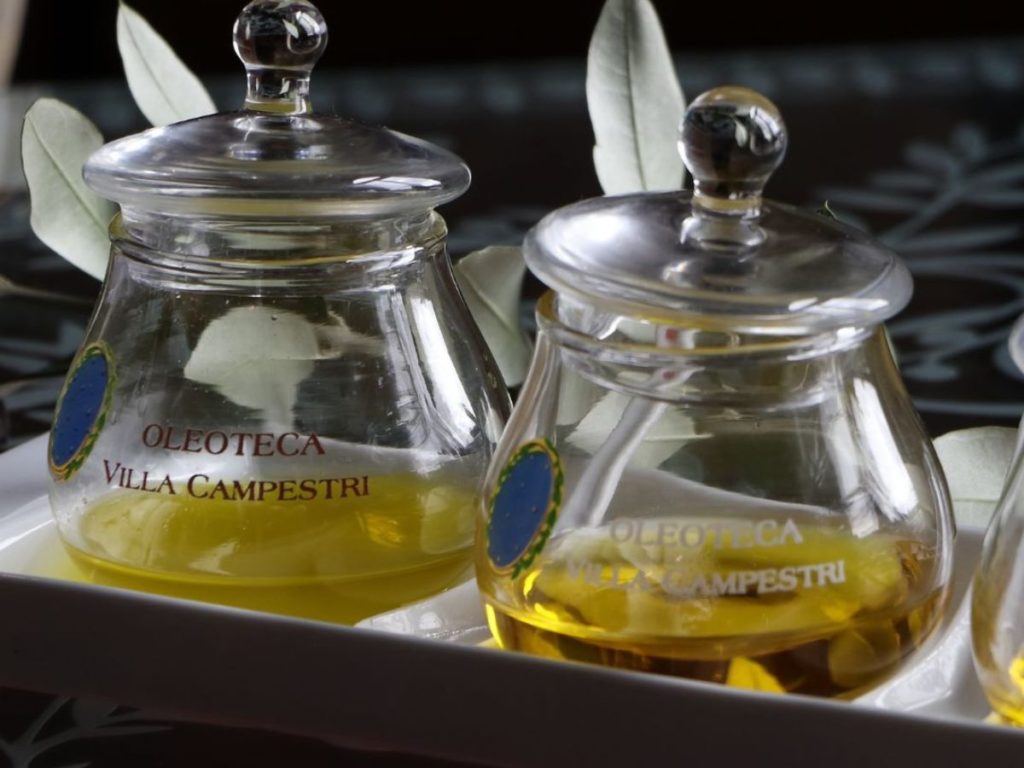
A good extra virgin olive oil can’t be judged by its color or its price tag. Labels tend to look alike, prices vary with no clear logic, and technical terms often add more confusion than clarity.
Some rely on instinct, or go for the most familiar brand. Others choose based on packaging or promotional claims. But the truth is this: you can’t judge the quality of olive oil at a glance. It takes a bit of attention, a few tools, and above all, a deeper awareness.
At Villa Campestri, the world’s first Olive Oil Resort, we’ve spent over thirty years working to restore olive oil to its rightful place: not just a condiment, but a living food, deeply rooted in the land, the landscape, and Mediterranean culture.
In this guide, we’ve gathered clear, practical insights to help you tell a true quality oil from a poor one, and to learn how to evaluate it with all your senses.
1. Color: not a reliable indicator of quality
One of the first things we notice about olive oil is its color, and it’s also one of the most misleading.
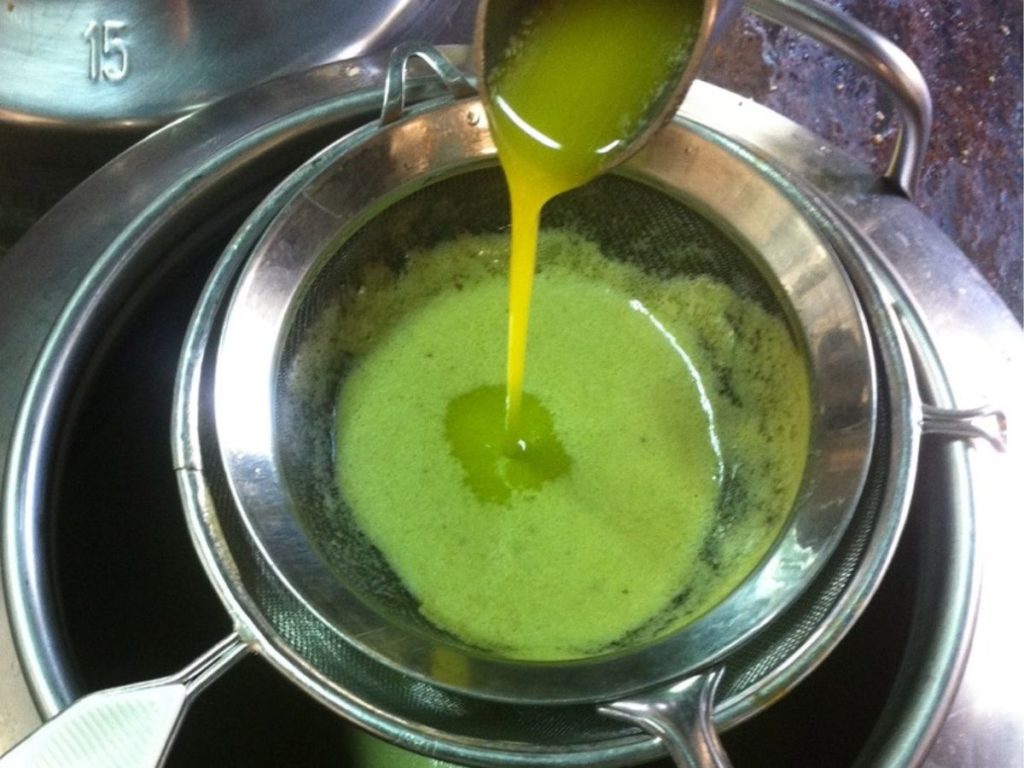
Extra virgin olive oil can range from bright green to golden yellow, depending on the olive variety, the ripeness at harvest, and the filtration method. In Tuscany, for example, many oils have green hues with golden reflections, but that doesn’t define their quality.
Color is never an objective criterion. A great oil can be light or dark; what matters is how stable it is over time and how it performs in other sensory parameters.
That said, color can still offer some useful clues: a cloudy or overly thick oil may indicate poor or absent filtration, or an excess of sediment. Sometimes that’s a deliberate choice, but unless it’s clearly explained, it’s fair to be cautious.
2. A good oil starts with the nose
The aroma is one of the most immediate indicators of quality in an extra virgin olive oil.
Pour a small amount into a glass, warm it gently between your hands, and smell it. A fresh, well-preserved oil made from healthy olives will release clean, vegetal notes: freshly cut grass, tomato leaf, artichoke, green almond, apple.
If the oil smells flat, dull, or, worse, like mold, damp, or rancidity, it’s likely oxidized, old, or poorly handled during production or storage.
The nose doesn’t lie. A good oil can be recognized before you even taste it.

3. Taste: bitterness and spice are signs of life
People often assume that a good olive oil should be “delicate,” or even neutral in flavor. In truth, a high-quality extra virgin olive oil should have character.
A proper tasting involves taking a small sip, letting the oil coat your tongue and palate, then swallowing slowly. If you notice a slight bitterness and a gentle peppery sensation at the back of the throat, that’s a sign the oil is rich in polyphenols, powerful antioxidants that benefit your health and preserve the oil’s freshness.

These sensory notes are signs of vitality and freshness.
If the oil tastes flat, overly sweet, or lacks aroma altogether, chances are it’s low-grade or past its prime.
Villa Campestri is a point of reference for those looking to explore the culture of high-quality extra virgin olive oil. With our olive oil tasting courses, you can learn to recognize the true identity of an oil, through its aroma, its flavor, and the story that each drop carries.
4. Reading the label: carefully, and critically
The label is a key tool in understanding what you’re buying. Here are the main elements to check:
- Origin of the olives: Choose oils that are 100% Italian or, even better, certified as IGP or DOP. Avoid vague terms like “EU blend” or “blend of EU and non-EU oils.”
- Extraction method: Terms like “cold pressed” or “cold extracted” indicate the oil was processed at low temperatures — a good sign for flavor and nutrition.
- Harvest date: Don’t just look at the expiration. The fresher the oil, the better. A high-quality oil should ideally be consumed within the year following harvest.
- Traceable producer or mill: The more transparent and specific the information, the more likely it is that serious, authentic work stands behind the product.
A vague, overly commercial, or uninformative label is always worth a second thought.
5. Price: when it’s too low (or too high)
A carefully produced extra virgin olive oil simply can’t cost just a few euros per liter.
Behind every bottle are months of work in the fields, manual harvesting, rapid pressing, quality control, bottling, and storage. A price that’s too low often means the oil was blended, imported, or industrially processed.
That said, a high price doesn’t automatically mean high quality either. Don’t rely on cost alone. Read. Research. Taste.
6. Traceability and trust: know who’s behind the oil
One of the biggest differences between a mass-market oil and a quality one is the relationship you can build with its producer.
Getting to know the story of a farm, visiting the olive mill, learning how and when the olives are harvested, and hearing directly from the people who make the oil, all of this helps you make a more informed choice.
At Villa Campestri, olive oil is at the heart of everything we do. Guests who stay at our resort can enjoy a complete sensory experience: from guided tastings to walks through the olive groves that surround the estate, over 7 hectares of centuries-old trees.
Villa Campestri’s Oil: quality, identity, and terroir
At Villa Campestri, we produce a certified organic extra virgin olive oil, cold-pressed within hours of harvesting, with full traceability and a short, transparent supply chain.
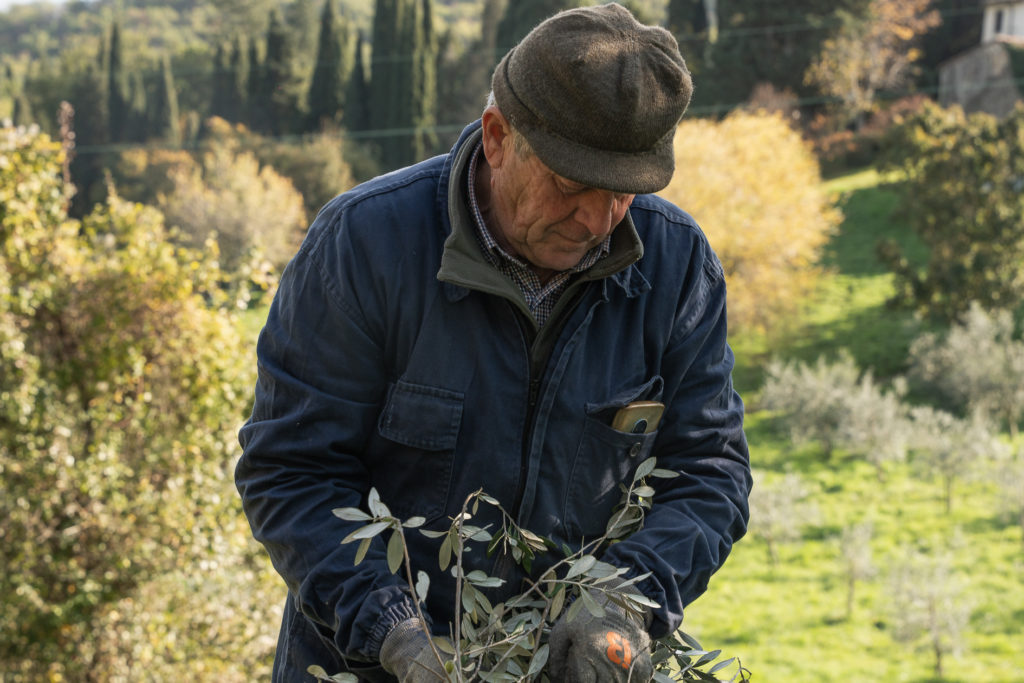
Our olive groves are home to many ancient trees that have been offering their fruit for generations. We harvest by hand and press the olives on the same day, in our own mill. The result is a true Tuscan extra virgin olive oil: clean, complex, and balanced.
It’s the oil we serve every day in our kitchen, the oil our guests taste at the table, and the oil we proudly share with those who want to understand what real quality means.
Because to us, olive oil isn’t just a product. It’s a living heritage, to be preserved and passed on.
Come discover where true Tuscan Olive Oil is born
Learning to recognize a quality extra virgin olive oil is a skill that takes time.
But it can also be an immediate pleasure, especially when experienced in the right place.
At Villa Campestri, we welcome you into a world where olive oil can be touched, tasted, understood. You can walk through the groves, watch the harvest, and meet the people who work this land every day. And of course, you’ll taste an oil that tells its story with precision and simplicity.
Because knowing what we eat matters. But knowing where it comes from matters even more.
Quick Booking snippet

Extra virgin olive oil is a natural product that continues to evolve after pressing. Heat, light and oxygen accelerate this process and gradually affect both flavour and quality. At Villa Campestri Olive Oil Resort, this is something we know well. Our family has been producing extra virgin olive oil for generations, using olives grown in […]
Mugello is best known for its charming villages, ancient woodlands, historic villas and quintessential Tuscan landscapes. What many people don’t realise is that, after sunset, its clear skies and low levels of light pollution create ideal conditions for observing constellations, planets and, at the right time of year, even the Milky Way stretching across the […]
Villa Campestri, the world’s first Olive Oil Resort, transforms extra virgin olive oil into an experience that brings together nature, gastronomy, wellbeing and a deep connection to the land.
Have you ever woken up in the morning feeling as tired as when you went to bed? Or found yourself exhausted at night, only to lie awake for hours? Perhaps you’ve experienced that familiar afternoon slump, when your energy suddenly disappears for no obvious reason. Most of us blame stress, a busy schedule or lack […]
One of the most meaningful experiences during a trip to Tuscany, beyond visiting art cities or iconic landscapes, is connecting with everyday local life. That connection often happens in village markets, artisan workshops, and small food shops where products are made for the people who live there year-round, not just for visitors. In this guide, […]
How to get to Mugello from Florence and how to travel around Tuscany with or without a car. Distances, trains, buses and transfers.
Romantic weekend in Tuscany between Mugello and Florence: scenic rooms, candlelight dinners, and olive oil tastings. Discover Villa Campestri Olive Oil Resort.
Anyone visiting Florence for the first time imagines a stay right in the historic center, surrounded by museums, piazzas, and narrow cobblestone streets. It takes only a day, however, to realize that Florence is wonderful to explore yet challenging to inhabit. Between ZTL restrictions, scarce and expensive parking, constant noise, and high prices for even […]