
New Tuscan olive oil, why is it bitter and peppery?

Freshly pressed extra virgin olive oil has a completely different aromatic and flavour profile from the more settled oil we use throughout the rest of the year. On the palate, it reveals pronounced herbaceous notes, a distinctive bitterness and a characteristic peppery sensation at the back of the throat.
These are not signs of a defect or high acidity. They are linked to the natural presence of polyphenols and antioxidants found in a young oil, extracted from healthy olives harvested at the right stage of ripeness.
Harvesting and pressing season
The olives are processed just a few hours after being picked from the tree. They reach the mill within no more than 24 hours to prevent fermentation, before being destemmed and defoliated, washed, crushed and cold-extracted by centrifugation.
In Tuscany and the Mugello, the olive harvest generally begins between mid-October and early November. The cool nights of the Apennine hills slow the ripening process, helping the olives develop a complex aromatic profile while preserving a high concentration of polyphenols.
Sensory analysis, the three key characteristics of fresh olive oil
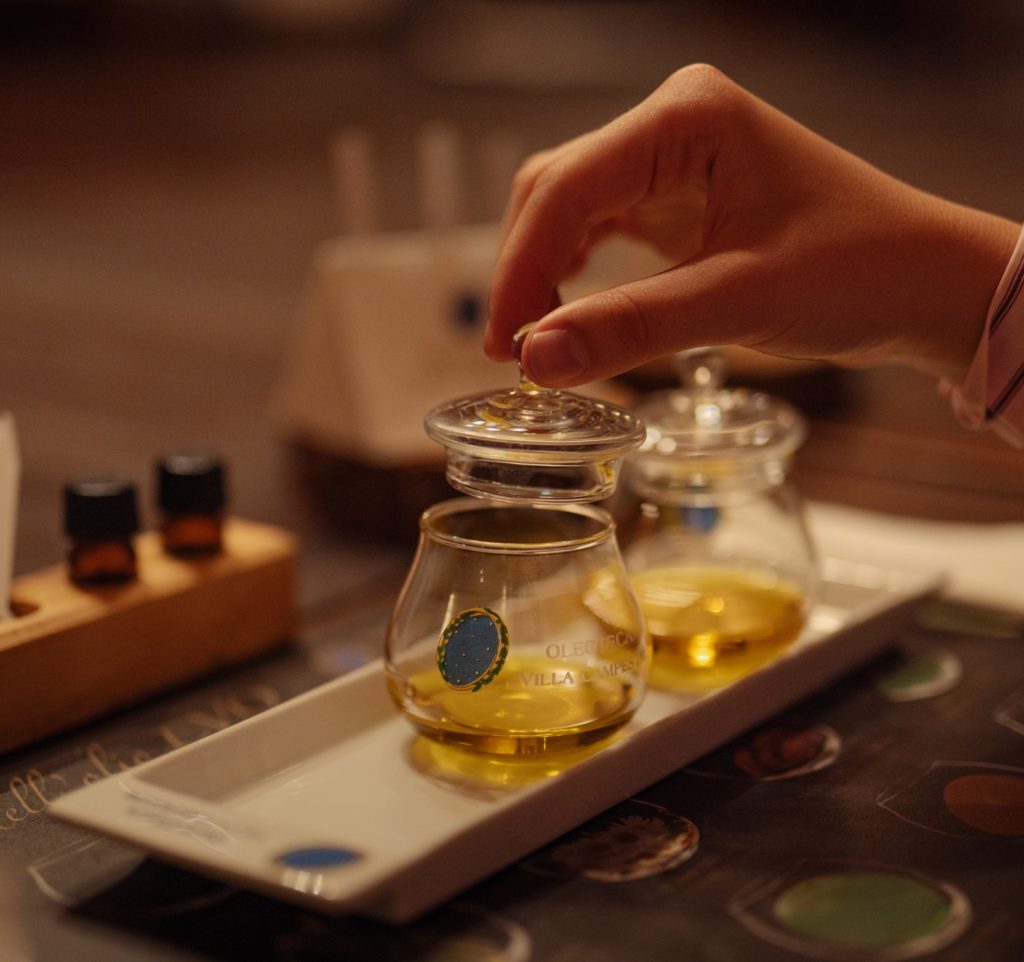
The sensory profile of freshly extracted olive oil is generally assessed through three main characteristics:
- Fruitiness (nose): intense, fresh scents reminiscent of cut grass, tomato leaf, artichoke and green almond.
- Bitterness (tongue and palate): a distinctive note produced when olives are pressed while they are still partially green and not yet fully ripe. It is one of the key indicators of freshness and quality.
- Pungency (throat): the characteristic peppery sensation felt mainly at the back of the throat.
As the months pass and the oil naturally settles, these characteristics gradually become softer. After six to eight months, the initial intensity gives way to a rounder, more harmonious flavour profile.
The chemistry behind the peppery sensation and the role of oleocanthal
The peppery sensation at the back of the throat is associated with oleocanthal, a naturally occurring phenolic compound found in high-quality extra virgin olive oil. Oleocanthal activates specific chemical receptors concentrated almost entirely in the throat, which is why particularly fresh oils can even trigger a slight urge to cough.
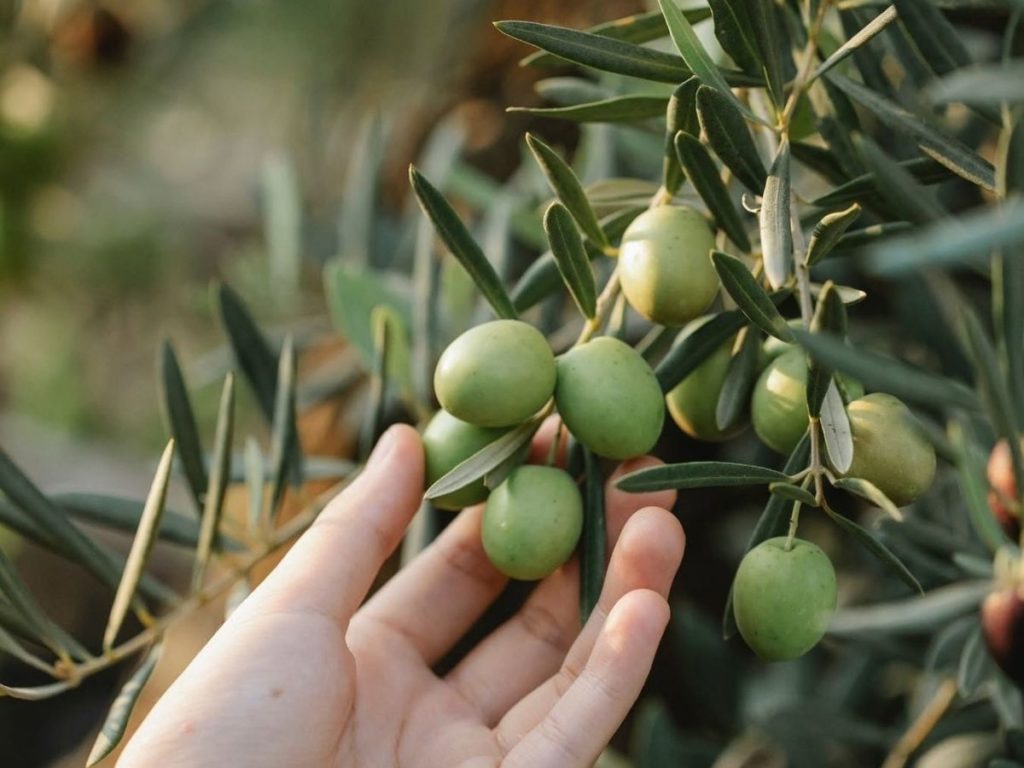
Scientific research has shown that oleocanthal has natural anti-inflammatory properties. Olive oil, however, remains a food rather than a medicine: the quantities consumed as part of a normal diet are not a substitute for medical treatment. The intensity of the peppery sensation varies depending on the cultivar – the variety of olive – as well as the harvest period and how recently the oil was extracted.
Cloudy olive oil and filtration, what you need to know
Fresh, unfiltered olive oil straight from the decanter has a naturally cloudy, opaque appearance. This haze comes from tiny droplets of vegetation water and microscopic particles of olive pulp suspended in the oil. Cloudy does not mean better. Haze is not an indication of superior quality; it simply means that the oil has not been filtered.
If the organic sediment that collects at the bottom of a bottle or tin remains in contact with the oil for several months, it can begin to ferment and alter its flavour, causing what is known as a muddy sediment defect. If you buy unfiltered olive oil, it is best enjoyed within the first few months of the year or carefully decanted into another container to remove the natural sediment.
New olive oil vs the bottle in your pantry: olive oil does not improve with age
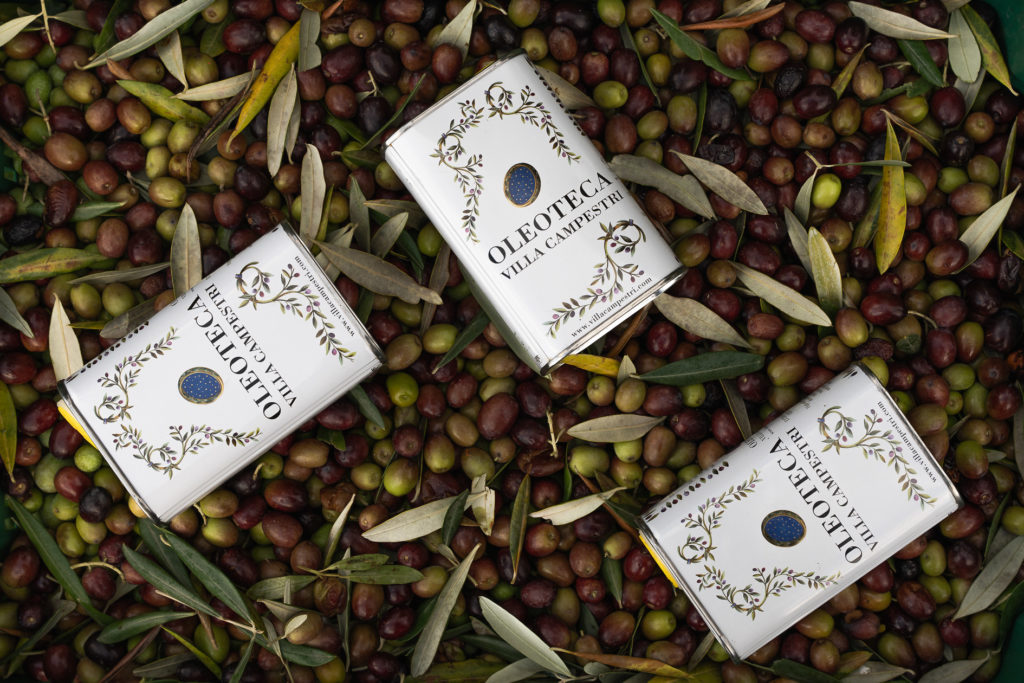
Unlike wine, extra virgin olive oil begins to deteriorate from the moment it is extracted. Exposure to oxygen, light and heat gradually affects both its aromas and its nutritional properties, reducing its polyphenol content over time.
- Is the oil in your pantry better, or should you choose new olive oil? It depends on what you have at home and how you plan to use it. Properly stored olive oil from the previous harvest will have developed a softer profile and can be excellent for cooking or delicate dishes where the intensity of new oil might overpower other flavours. New olive oil, on the other hand, is unbeatable when used raw, thanks to its aromatic intensity and distinctive sensory character. If the bottle in your pantry has been open for many months or comes from an older harvest, it will already have lost much of its aroma and antioxidant content: in that case, replacing it with oil from the new harvest makes sense.
- How to tell the age of olive oil from the label: Italian law requires the harvest year, for example, 2026/2027, to be stated for certain extra virgin olive oils, including oils produced entirely from olives harvested in Italy. This is the most reliable indication of when the olives were actually harvested and pressed.
- Best-before date: The date shown as “best before” generally refers to around 18 months from the bottling date, not the pressing date. If you want to understand how fresh an oil really is, the harvest year remains the most useful reference.
Storage and use in the kitchen
Extra virgin olive oil does not improve with age. To preserve the polyphenols and aromas of freshly pressed oil, follow three basic storage rules:
- Keep it away from light: choose dark glass bottles or food-grade metal tins.
- Control the temperature: store it between 12°C and 18°C, away from heat sources.
- Limit exposure to air: always close the bottle tightly to slow oxidation.
In the kitchen, freshly pressed olive oil is at its most expressive when used raw: drizzled over toasted bread, added to a hot legume soup just before serving, or paired with fresh vegetables and pinzimonio. Long cooking times and deep-frying are less suited to new olive oil when the aim is to appreciate its fresh aromatic profile, as heat reduces many of the aromas and antioxidant compounds that make it so distinctive.
New olive oil at Villa Campestri Olive Oil Resort
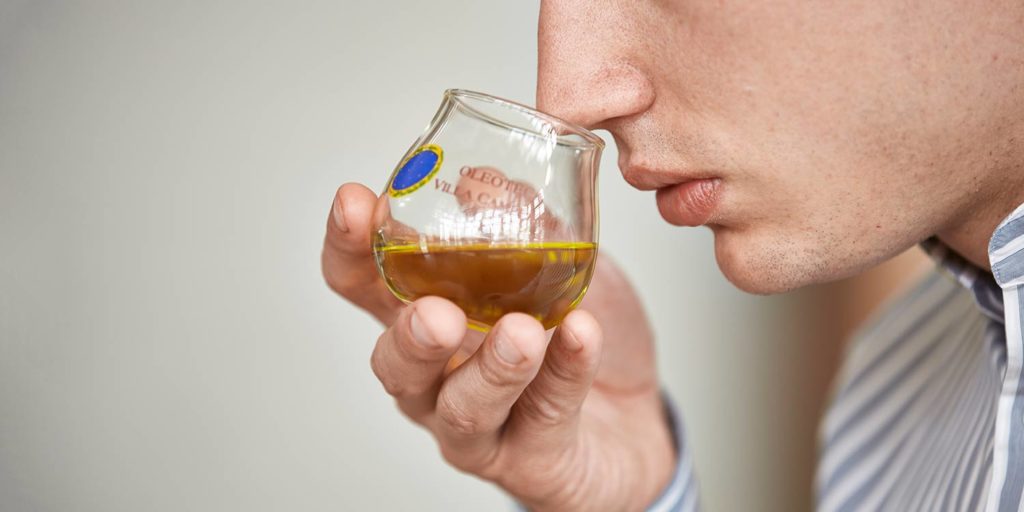
At Villa Campestri Olive Oil Resort, set within a 140-hectare estate in the hills of Vicchio, olive pressing is one of the defining moments of autumn. The estate’s centuries-old olive trees include some of Tuscany’s traditional cultivars: Frantoio, Leccino, Moraiolo and Pendolino.
The olives are hand-picked and processed within just a few hours. At the estate’s own olive mill, they are transformed into a bright green extra virgin olive oil with distinctive aromas of artichoke and fresh grass, balanced by characteristic bitter and peppery notes. Through the resort’s Oleoteca and dedicated sensory tasting experiences, guests can taste freshly pressed olive oil right where it is made, discovering first-hand the importance of cold extraction and a short, carefully controlled supply chain.
For information about this season’s new olive oil or to book a guided tasting at our Oleoteca, please contact us directly.
Quick Booking snippet

Freshly pressed extra virgin olive oil has a completely different aromatic and flavour profile from the more settled oil we use throughout the rest of the year. On the palate, it reveals pronounced herbaceous notes, a distinctive bitterness and a characteristic peppery sensation at the back of the throat. These are not signs of a […]
Thanks to its varied elevations and woodland, the Mugello enjoys a particularly long and gradual foliage season. Chestnut, beech and oak trees change colour at different times, transforming the landscape week after week just a short drive from Florence. In this guide, you’ll find the best routes to choose depending on how much time you […]
Extra virgin olive oil is a natural product that continues to evolve after pressing. Heat, light and oxygen accelerate this process and gradually affect both flavour and quality. At Villa Campestri Olive Oil Resort, this is something we know well. Our family has been producing extra virgin olive oil for generations, using olives grown in […]
Mugello is best known for its charming villages, ancient woodlands, historic villas and quintessential Tuscan landscapes. What many people don’t realise is that, after sunset, its clear skies and low levels of light pollution create ideal conditions for observing constellations, planets and, at the right time of year, even the Milky Way stretching across the […]
Villa Campestri, the world’s first Olive Oil Resort, transforms extra virgin olive oil into an experience that brings together nature, gastronomy, wellbeing and a deep connection to the land.
Have you ever woken up in the morning feeling as tired as when you went to bed? Or found yourself exhausted at night, only to lie awake for hours? Perhaps you’ve experienced that familiar afternoon slump, when your energy suddenly disappears for no obvious reason. Most of us blame stress, a busy schedule or lack […]
One of the most meaningful experiences during a trip to Tuscany, beyond visiting art cities or iconic landscapes, is connecting with everyday local life. That connection often happens in village markets, artisan workshops, and small food shops where products are made for the people who live there year-round, not just for visitors. In this guide, […]
How to get to Mugello from Florence and how to travel around Tuscany with or without a car. Distances, trains, buses and transfers.