Tuscan Bread History and Traditions
Tuscan breadhas always been a kind of trademark: it would be enough to taste a piece of it to understand that we have arrived in Tuscany.
In fact, the history of the silly bread, that is, without salt, dates back to the mists of time: already in documents of the Roman era, among which the writings of Tito Livio deserve to be mentioned, we speak of Tuscany and its production of bread and wheat.
Now, after so many centuries, bread without salt has become synonymous with this region and the legends about its birth are counted no more. Let’s see below to understand something more about Tuscan bread and its history.
The birth of no salt bread: between myth and reality
According to tradition, everything was born, for a change, from a dispute between Pisans and Florentines, in the twelfth century.
What is certain is that already in the seventeenth canto of the paradise of the Divine Comedy, Dante refers to tuscan bread.
In fact Messer Cacciaguida, great-great-grandfather of Dante himself, prophesies to the Supreme Poet a future exile in which he will be forced to eat bread with salt.
«Tu proverai sì come sa di sale
lo pane altrui, e come è duro calle
lo scendere e ‘l salir per l’altrui scale.»
As far as historical documents are concerned, the production of bread without salt is already ascertained in the sixteenth century by a writing by Pierandrea Mattioli.
In 1765 Saverio Manetti describes the preparation of Tuscan bread focusing on the absence of salt, on the use of natural yeast, called “formento”, with sour dough that was kept in the cupboards in the middle of the flour.
Bread has always been central to the life of all social classes and its processing has scrupulously followed tradition over the centuries.
It is said that the lack of salt was not a conceptual choice, but rather a consequence of the high price of the salt that was to be used for the preservation of the meat.
In every farmhouse, at the time, both main elements of production could be found: the wood-burning oven for cooking and the cupboard.
Bread between Tradition and Modernity
In Tuscany, tradition is law and the production of bread is no exception: the processing of this fundamental food has in fact reached our days without substantial variations.
The Tuscan bread that we can taste today is the same as that which was eaten by Dante Alighieri and Boccaccio and which we see depicted in many medieval miniatures.
In fact, the production has maintained all its original characteristics thanks to the centrality that bread has always had in peasant life.
The beneficial properties, more or less realistic, that are recognized in this type of bread are really many, so much so that when visiting Tuscany it is not uncommon to hear a motto that reads: “good wheat bread keeps the doctor away“.
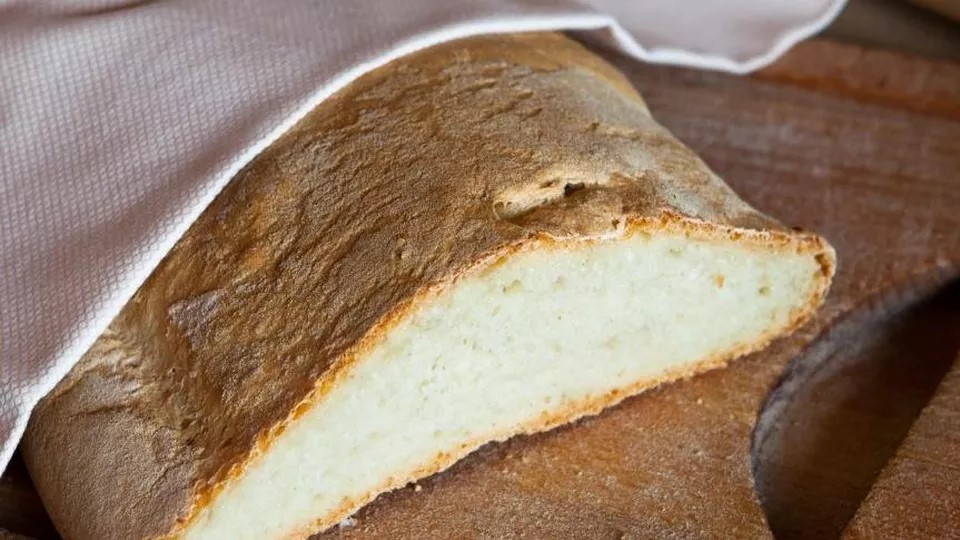
Even today, therefore, Tuscan bread has a chiaroscuro crust and a compact, crumbly and porous crumb.
The flavor is obviously bland and is ideal for accompanying cold cuts.
In 2016, Tuscan bread obtained DOP recognition, with the European directive 2016/58 / EU, published in the Official Journal of the European Union on 4 March.
Come to Mugello to Taste Tuscan Bread
If you love good local cuisine and want to taste all the fragrance of unsalted Tuscan bread, we are waiting for you at Villa Campestri Olive Oil Resort!
Quick Booking snippet

Extra virgin olive oil is a natural product that continues to evolve after pressing. Heat, light and oxygen accelerate this process and gradually affect both flavour and quality. At Villa Campestri Olive Oil Resort, this is something we know well. Our family has been producing extra virgin olive oil for generations, using olives grown in […]
Mugello is best known for its charming villages, ancient woodlands, historic villas and quintessential Tuscan landscapes. What many people don’t realise is that, after sunset, its clear skies and low levels of light pollution create ideal conditions for observing constellations, planets and, at the right time of year, even the Milky Way stretching across the […]
Villa Campestri, the world’s first Olive Oil Resort, transforms extra virgin olive oil into an experience that brings together nature, gastronomy, wellbeing and a deep connection to the land.
Have you ever woken up in the morning feeling as tired as when you went to bed? Or found yourself exhausted at night, only to lie awake for hours? Perhaps you’ve experienced that familiar afternoon slump, when your energy suddenly disappears for no obvious reason. Most of us blame stress, a busy schedule or lack […]
One of the most meaningful experiences during a trip to Tuscany, beyond visiting art cities or iconic landscapes, is connecting with everyday local life. That connection often happens in village markets, artisan workshops, and small food shops where products are made for the people who live there year-round, not just for visitors. In this guide, […]
How to get to Mugello from Florence and how to travel around Tuscany with or without a car. Distances, trains, buses and transfers.
Romantic weekend in Tuscany between Mugello and Florence: scenic rooms, candlelight dinners, and olive oil tastings. Discover Villa Campestri Olive Oil Resort.
Anyone visiting Florence for the first time imagines a stay right in the historic center, surrounded by museums, piazzas, and narrow cobblestone streets. It takes only a day, however, to realize that Florence is wonderful to explore yet challenging to inhabit. Between ZTL restrictions, scarce and expensive parking, constant noise, and high prices for even […]