How to recognize authentic Renaissance-style furnishings
The furniture has always been faithful and discreet witnesses of human affairs, of changing times and of the evolution of taste. Discover with us how to recognize authentic Renaissance-style furnishings!
Italian furniture from the Middle Ages to the Renaissance
Furniture production have an ancient history that goes through times and eras.
The ancient civilizations of the Mediterranean and Mesopotamia, such as the Egyptian or the Assyrian-Babylonian, had reached very high technical levels in the processing of stone, wood and metals, creating incomparable furnishings.
In the Middle Ages, an era marked by wars and political instability causing the loss of many cultural and technical knowledge acquired during antiquity, the furniture was rustic, without decorations and poor in types.
Among the various types of medieval furniture it is especially important the chest, from which the sideboard will derive. As far as the seats after the year 1000 are concerned, the first three-legged stools make their appearance.
However, it will be only in the thirteenth century that the furniture will begin to present stylistic features under the formal and decorative features, with references first to the late Romanesque and then to the Gothic period.
The recurrent motifs of the gothic are the cruciform flowers, the rosettes, the pointed arches, the parchment motif, the fantastic and symbolic animals, the tendrils and the garlands. In the construction, oak and walnut wood are predominant.
Renaissance style furnishings: how to recognize it
The term Renaissance rather than a style, it refers to the artistic culture that in Italy had Tuscany as its center of expansion and, in particular, the city of Florence.
This movement can be divided into three periods:
- The early Renaissance or Humanism, from 1400 to 1500;
- The high Renaissance, from 1500 to 1540;
- The late Renaissance, from 1540 to 1600.
In this cultural context, splendid and unrepeatable, the evolution of furniture is enriched with new models such as simple and double-bodied beliefs, benches, cabinets, beds with base and canopy, which, under the constructive aspectc, can be traced back to the architectural forms.
Features of the Renaissance style furnishings are also folding chairs: the savonarola and the dante.
The volumes, strictly square, are decorated with frames, moldings, beads, pilasters, capitals, lozenges, bugnature, paws and lion heads, grotesques, masks, all elements and motifs of the classical tradition.
Walnut becomes the main wood in the construction and various decorative techniques are refined, such as the pastille, the graffito, the inlay and the carving.
It takes a good eye to recognize authentic Renaissance-style furniture from a fake author, but the elegance of original furnishings is immediately apparent.
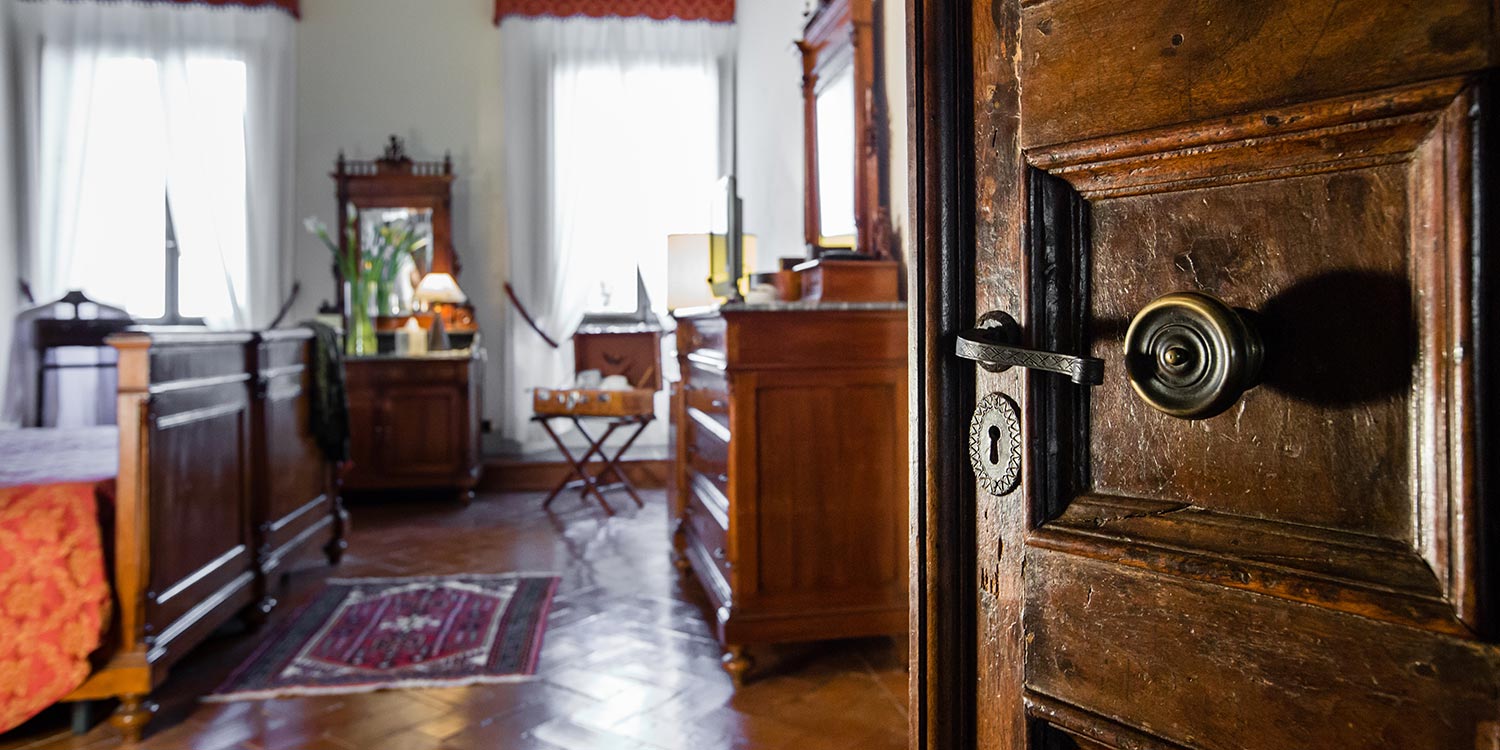
At Villa Campestri, for example, the 25 rooms and suites of the Resort are arranged according to the original layout of the Renaissance period, expertly restored and furnished with authentic period furniture.
If you love the Renaissance style, discover the magic and the wonderful emotions that our luxury Resort can awaken in all the people who choose to immerse themselves in this wonderful atmosphere.
Quick Booking snippet

Extra virgin olive oil is a natural product that continues to evolve after pressing. Heat, light and oxygen accelerate this process and gradually affect both flavour and quality. At Villa Campestri Olive Oil Resort, this is something we know well. Our family has been producing extra virgin olive oil for generations, using olives grown in […]
Mugello is best known for its charming villages, ancient woodlands, historic villas and quintessential Tuscan landscapes. What many people don’t realise is that, after sunset, its clear skies and low levels of light pollution create ideal conditions for observing constellations, planets and, at the right time of year, even the Milky Way stretching across the […]
Villa Campestri, the world’s first Olive Oil Resort, transforms extra virgin olive oil into an experience that brings together nature, gastronomy, wellbeing and a deep connection to the land.
Have you ever woken up in the morning feeling as tired as when you went to bed? Or found yourself exhausted at night, only to lie awake for hours? Perhaps you’ve experienced that familiar afternoon slump, when your energy suddenly disappears for no obvious reason. Most of us blame stress, a busy schedule or lack […]
One of the most meaningful experiences during a trip to Tuscany, beyond visiting art cities or iconic landscapes, is connecting with everyday local life. That connection often happens in village markets, artisan workshops, and small food shops where products are made for the people who live there year-round, not just for visitors. In this guide, […]
How to get to Mugello from Florence and how to travel around Tuscany with or without a car. Distances, trains, buses and transfers.
Romantic weekend in Tuscany between Mugello and Florence: scenic rooms, candlelight dinners, and olive oil tastings. Discover Villa Campestri Olive Oil Resort.
Anyone visiting Florence for the first time imagines a stay right in the historic center, surrounded by museums, piazzas, and narrow cobblestone streets. It takes only a day, however, to realize that Florence is wonderful to explore yet challenging to inhabit. Between ZTL restrictions, scarce and expensive parking, constant noise, and high prices for even […]