First International Conference on “Food Values”
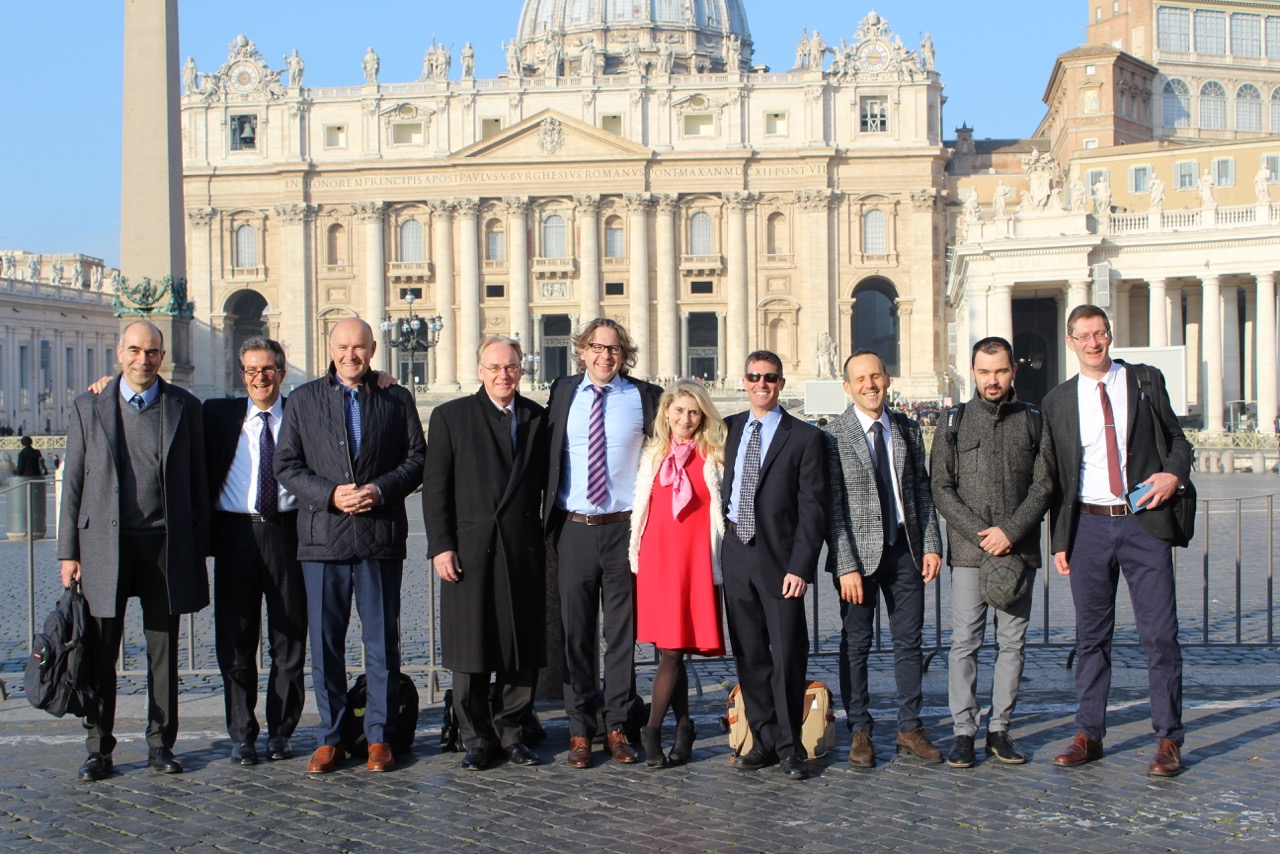
On Febraury 14th, 2017 the first International Conference on “Food Values” has been held in the Vatican City, Casina Pio IV, Rome.
The Conference has been organized by Paul Pasquali of Villa Campestri, and was focused on the Renaissance of the Mediterranean Diet and its significance for a 21th century world.
Over the last few decades a considerable body of evidence has been published demonstrating the relationship between diet and health.
The Mediterranean Diet has been extensively reported to be associated with a favourable health outcome and a better quality of life.
However, despite the increasing evidence about these benefits, recent data indicate that adherence to this eating pattern is decreasing also in the Mediterranean regions, particularly among children and adolescents.
The Conference objective is to acknowledge the link between food quality, processing, cultural traditions and health/wellbeing using the Mediterranean Diet as the most established example.
A goal very close to Paolo Pasquali and Villa Campestri Olive Oil Resort.
Moreover, the Conference will aim to produce a consensus statement to reaffirm and celebrate the vital links between what we eat and our wellbeing and describe the potential cost of failure to value food and its place in a sustainable and healthy world.
The Conference is very timely, as the top consumer trends for 2017 are authenticity and healthy living.
With calls to action by governments, industry and the medical/scientific community, there is the great potential to make a difference through a Renaissance of the Mediterranean Diet in the 21st Century.
The program has been exceptionally rich.
The opening session was edited by Marcelo Sànchez Sorondo, Chancellor of the Pontifical Academy of Sciences and Pontifical Academy of Social Sciences and Paolo Pasquali, co-founder of Mugello Cradle of Renaissance and owner at Villa Campestri Olive Oil Resort, where for years is produced an excellent quality oil, appreciated throughout the world.
Food and Health, the Science of the Mediterranean Lifestyle
Dr David Katz, founding Director of the Yale-Griffin Prevention Research Center at the Yale University, opened the session of “Food and Health, the Science of the Mediterranean Lifestyle” talking about Food and Health in the modern world.
With a monumental volume of evidence and a global consensus of experts, diet is among the most powerful of influences on human health.
The main message of his speech was that we must love food that loves our health and the planet back.
Dr. Francesco Sofi, Associate Professor of Clinical Nutrition at University of Florence, talked about how diet may significantly affect the health state of the population.
A correct dietary intake, associated with a correct lifestyle, may in fact contribute to the maintenance of a healthy status.
Conversely, wrong dietary habits may favour the incidence of different chronic diseases.
The ideal diet for the prevention of cardiovascular diseases is only a Mediterranean-style dietary pattern that showed consistent findings in terms of protection versus the major chronic degenerative diseases.
Furthermore, he demonstrated that subjects allocated to a Mediterranean diet had, as compared with subjects following a control diet, better anthropometrical, metabolic, and inflammatory risk parameters.
Dr. Francesco Visioli, Associate Professor of Human Nutrition at University of Padua, discussed about the beneficial components of the Mediterranean Diet.
For sure, the near totality of epidemiological studies and several human trials show that an adequate micronutrients, e.g. vitamins, minerals, polyphenols, essential fatty acids intake is associated with positive modulations of markers of degenerative disease, notably cancer and cardiovascular disease.
The beneficial activities of micronutrients are not limited to their antioxidant activity, but are also due to a variety of mechanism, often interrelated.
Whatever their precise mechanism of action are, the general advice to the public is to consume a balanced diet with plenty of vegetal products now rests on firm ground.
Dr. Stefano Benedettelli, Associate Professor of Plant Genetics at University of Florence talked about “Ancient Grains and Health: from farm to fork”.
Wheat is consumed by billions of people and it is the major staple food in many diets.
Wheat represents a healthy source of multiple nutrients, dietary fibre and bioactive compounds, especially if consumed as a whole-grain.
Recently, scientists confirmed the association between the consumption of whole grains and a substantial and significant decreased risk for cardiovascular disease and cancer.
In order to ameliorate health potential, ancient wheat species have gained increasing attention since several studies have suggested that they could present healthier and a better nutritional profile then modern wheats, by providing more vitamins, minerals and nutraceutical compounds.
In addition, given that ancient varieties are cultivated with environmental sustainability, these varieties may represent an alternative potential.
Dr. Antonia Trichopoulou, President of Hellenic Health Foundation and Head WHO collaborating Centre for Nutrition and Health, Athens Medical School, is amongst the greatest expert in nutrition and Mediterranean Diet.
The traditional Mediterranean Diet which is the dietary pattern prevailing among the people of the olive tree-growing areas of the Mediterranean basin made its influence on lifestyle, including diet, is more than just a diet, it is a whole healthy lifestyle pattern that has been acknowledged by UNESCO in 2010 as an intangibile cultural heritage.
Med Diet is an example of a sustainable diet in which nutrition, biodiversity, local food production and local culture are closely interconnected.
Food Traditions and Cultural Heritage, Valuing the old in the modern world
Open the session Giorgio Locatelli, Chef and Patron at Locanda Locatelli, London. His speech focused on “Food and Stories: inspiring people to value cooking”.
As a Chef, Locatelli says that many people overlook the value of the conviviality of food and the benefits this has on wellbeing.
The Mediterranean Diet itself is not solely about the food being consumed and relationship it has with environment but also the circumstances and surroundings in which it is eaten.
For sure it is difficult to calculate the value in the conviviality of food and this is an area which we must draw our attention.
Greg Drescher, Vice President and Strategic Initiatives and Industry leadership of the Culinary Institute of America.
From his point of view, Greg Drescher says that Chefs are in a unique position to champion healthier, sustainable food choices.
To clarify what he views as priorities for change and most promising strategies, Culinary Institute of America is highlighting the value of the term “plant-forward”, which we are defining as: “A style of cooking and eating that emphasizes and celebrates, but is not limited to, plant-based foods – including fruits and vegetables; whole grains; beans, other legumes, and soy foods; nuts and seeds; plant oils; and herbs and spices – and that reflects evidence-based principles of health and sustainability”.
This short descriptor links to a longer definition that further specifies minimally processed, slow-metabolizing foods and other supporting imperatives.
Jean-Xavier Guinard, Professor and Sensory Scientist at University of Davis, California.
While our sensitivities to most of the stimuli in our diet are normally distributed, there are still significant inter-individual differences in sensitivity to consider when designing strategies for healthier food choices.
It remains that we have an innate liking for fat, sugar and salt and innate dislikes for the often bitter, sour, pungent and astringent properties of antioxidants.
With the Healthy Flavors Research Initiative, and in collaboration with the Culinary Institute of America and UC Davis Dining Services, scientists are developing and testing sensory and culinary strategies for healthier recipes with uncompromised sensory appeal.
The working hypothesis is that less healthy ingredients in a dish can successfully be replaced with healthier ones without loss of palatability if those healthier ingredients also have flavor-boosting properties.
For example beef could be partially substituted with mushrooms in taco blends without reduction in flavor or acceptance for most the consumer population they tested because of the mushrooms’ umami properties.
We have since used the same experimental approach to research the substitution of butter with olive oil in select recipes.
Next steps in Guinard’s research approach will include the development of sensory, culinary and nutrition education strategies and personalized apps for dietary change.
All in line with a Renaissance of the Mediterranean Diet indeed.
Ms. Sara Baer Sinnott, President of the Oldways, Boston.
Sara talked about “Encouraging old ways and tastes in the new world”.
When Oldways, along with the Harvard School of Public Health and a renowned international group of nutrition scientists, introduced the Mediterranean Diet Pyramid in 1993, in America, olive oil was considered an unusual ethnic product and most of the country was afraid of fat.
There is, actually, a vast, global consensus among experts in diverse fields about the fundamentals of diet that favor both human and planetary well-being.
The consensus?
As documented in the Oldways Finding Common Ground Consensus Statement, it is the old ways – overall healthy eating patterns, heritage diets like the Mediterranean Diet that are good for people and good for the planet.
Food and Health, the urgent need for a new approach
The Conference continued with Professor Daniele Del Rio, Associate Professor of Human Nutrition at University of Parma.
His speech at the Conference focused on “Food and Nutrition education and communication: the road to the future”.
The contribution of dietary choices to cardiovascular and metabolic risk is growing year upon year.
Among the reasons, three must, at least in his opinion, be readily faced.
Firstly, basic and applied research in food and nutrition has not yet been subjected to rigorous quality control as is the case in medical/pharmaceutical research.
Secondly, there is inadequate investment in evidence-informed food and nutrition education to match the global challenges described above.
Providing high-quality food and nutrition knowledge and skills to future and practicing healthcare professionals, food scientists and technologists as well as to those with key training and advisory roles, is one sustainable way that we can work towards building healthier populations in multiple countries.
Children should also be prioritised, as they are obviously more prone to learn and a wonderful vehicle of information and behavioural change for their parents.
Finally, much better care in communicating nutritional recommendations, as well as knowledge translation based on new discoveries and breaking evidence, is a fundamental step to make the population more aware of the incredible impact of their dietary choices on their personal health.
Finally Dr. Simon Poole, physician, Author and Commentator, in Cambridge, talked about the “Inspiring a Renaissance in food values”.
Many modern industrial and post-industrial societies are seeing an ever-increasing burden of chronic disease and obesity, contributed to by increasing access to poor quality food.
There have also been considerable changes in our view of what we eat, the way we eat and how we prepare our food.
Yet paradoxically there is increasing evidence that the lifestyles associated with more traditional cultures are often conducive to longer and healthier lives, and exist in more sustainable environments.
We have considerable knowledge and evidence to describe what a good diet should look like.
It can therefore be asserted that there is an urgent need to rediscover those older relationships with the way we prepare and enjoy the food we eat.
There is a need for a more enlightened view of the potential damage arising from modern methods of food processing and a better understanding of the benefits of placing a greater value on what and how we eat.
A renaissance in the value we place on food is urgently needed to reverse what is a growing health crisis in many parts of the world.
This urgency has led Paolo Pasquali, owner of Villa Campestri, to organize the first International Conference on “the Food Values.”
The goal is to return to produce healthy and quality food, just like the oil produced at Villa Campestri, obtained working olives the same day of collection.




Quick Booking snippet

Extra virgin olive oil is a natural product that continues to evolve after pressing. Heat, light and oxygen accelerate this process and gradually affect both flavour and quality. At Villa Campestri Olive Oil Resort, this is something we know well. Our family has been producing extra virgin olive oil for generations, using olives grown in […]
Mugello is best known for its charming villages, ancient woodlands, historic villas and quintessential Tuscan landscapes. What many people don’t realise is that, after sunset, its clear skies and low levels of light pollution create ideal conditions for observing constellations, planets and, at the right time of year, even the Milky Way stretching across the […]
Villa Campestri, the world’s first Olive Oil Resort, transforms extra virgin olive oil into an experience that brings together nature, gastronomy, wellbeing and a deep connection to the land.
Have you ever woken up in the morning feeling as tired as when you went to bed? Or found yourself exhausted at night, only to lie awake for hours? Perhaps you’ve experienced that familiar afternoon slump, when your energy suddenly disappears for no obvious reason. Most of us blame stress, a busy schedule or lack […]
One of the most meaningful experiences during a trip to Tuscany, beyond visiting art cities or iconic landscapes, is connecting with everyday local life. That connection often happens in village markets, artisan workshops, and small food shops where products are made for the people who live there year-round, not just for visitors. In this guide, […]
How to get to Mugello from Florence and how to travel around Tuscany with or without a car. Distances, trains, buses and transfers.
Romantic weekend in Tuscany between Mugello and Florence: scenic rooms, candlelight dinners, and olive oil tastings. Discover Villa Campestri Olive Oil Resort.
Anyone visiting Florence for the first time imagines a stay right in the historic center, surrounded by museums, piazzas, and narrow cobblestone streets. It takes only a day, however, to realize that Florence is wonderful to explore yet challenging to inhabit. Between ZTL restrictions, scarce and expensive parking, constant noise, and high prices for even […]