Tuscan Pappa al Pomodoro: here’s how to make it at home
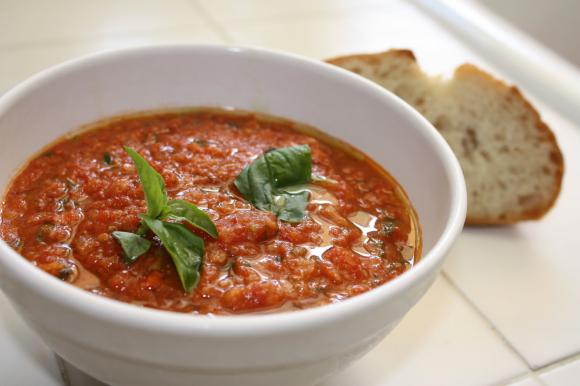
Tomato is one of the symbolic foods of Italian cuisine. Undisputed king for pasta sauces in the collective imagination, as well as a must for pizza, it finds its place in many traditional dishes. One of these is the pappa al pomodoro, so well known that it became the title of a very famous song from the 60s. “Viva la pappa col pomodoro” sang Rita Pavone, underlining how it was a dish loved by everyone in an Italy that she was poorer than today.
In fact, the ingredients are simple and low-cost. As always, it is the skill of the cook who manages to transform natural foods into mouth-watering dishes. All you need is the right information, a little practice and a few tricks, and you too will know how to prepare an excellent Pappa al Pomodoro at home.
The origin of the Pappa al Pomodoro recipe
The Italian culinary tradition collects recipes at a regional level and each area is very proud of its own version. In this case, we can identify the original Pappa al Pomodoro in the Tuscan one, in particular the one that is handed down in Siena.
Although the tomato is a summer vegetable, given that it ripens under the hot Italian sun, it is good all year round. Indeed, it is the way to enjoy tomatoes even on cold days, when it is really a pleasure to eat something hot and raw tomatoes are a little less tasty than in August.
In fact, the basic ingredient is the sauce, which is the right way to ensure the taste of tomatoes even in winter.
The secret to the best tomato soup
In this regard, here is a secret to keep in mind: to prepare the Pappa al Pomodoro at home it is essential to make the home made tomato sauce; the final dish will have a completely different flavor.
Start with ripe tomatoes, cut them and throw them in boiling water for 1 minute on the clock.
After removing the seeds, pass the tomatoes through a sieve by hand (not with the blender) and collect in a container.
It may seem more convenient to use the ready-made puree in the bottle but you will see that this step will make a real difference.
How to make Tuscan Pappa al Pomodoro
Now that you have the base for the sauce, collect all the other ingredients. Attention: the choice of bread is also fundamental.
Of course it must be the Tuscan one, but it must also be stale. Since it is a poor and peasant recipe, it was the ideal way to recover old bread, when the loaves were made at home and consumed until the end.
Here are the ingredients to make the tomato soup (for 4 people):
• 800 grams of homemade passata
• 1 liter of vegetable broth
• 300 grams of stale Tuscan bread
• 2 cloves of garlic
• Salt – sugar – pepper – extra virgin olive oil
Cut the bread into slices and toast it in the oven in the heat for a few minutes.
Then rub the slices with the garlic cloves and place them on the bottom of a high-sided saucepan.
Pour over the vegetable broth and tomato sauce, and place everything on the stove. Continue cooking over low heat for at least 45 minutes.
Where to eat pappa al pomodoro in Florence
There are many typical dishes of Tuscany, among these, a particular place is occupied by pappa al pomodoro, a dish considered poor, but really delicious.
Born as a “bread saver”, in order to prevent hardened loaves from being thrown away, pappa al pomodoro is really easy and quick to prepare even at home, thanks above all to the few simple ingredients it is made of (bread, tomatoes, oil and flavorings).
Lovers of this traditional dish, however, cannot fail to taste the one prepared in a Tuscan restaurant, with respect for tradition and goodness.
So let’s see immediately below which are the best restaurants and taverns where you can taste pappa al pomodoro, focusing in particular on those located in the capital of the region, namely Florence.
Il Borro Tuscan Bistrot
Let’s start with a very refined restaurant, which overlooks the Arno and where a very high quality pappa al pomodoro is prepared, thanks to the search for the best specimens of tomatoes (here the variety of the Florentine rib is usually used) harvested to the point right, to which is added the other protagonist of the dish, i.e. stale bread, deprived of the crust so that the porridge does not get loaded with an excessive dose of starch, which would make it stringy. Complete the work with a drizzle of oil and a few fresh basil leaves.
The Holy Drinker
For this restaurant located near Palazzo Pitti, pappa al pomodoro represents the meeting point of the menu between the classicism and the modernity of other courses. According to the chef who works here, Luca Marin, the bread used is made “at home” thanks to the oven located not far from the restaurant, while the tomatoes are both fresh and tinned; a good dose of oil and basil can never be missing. But apart from the excellent ingredients, the fundamental element for making a self-respecting pappa al pomodoro is, according to the chef, the passion for the dish itself, which can and must be cooked only with calm and love.
Osteria Antica Mescita San Niccolò
In the heart of Florence stands this ancient tavern which is very quiet, as in principle it is not overrun by tourists. Here too it is possible to taste a first-class pappa al pomodoro, made with lightly salted bread from which most of the starch is removed thanks to a long conservation in a slightly heated oven.
Osteria Pepo
We close the circle with another tavern, also located in the center of Florence, which also has the everlasting pappa al pomodoro as its main dish, which is cooked here using traditional Tuscan bread, the one that generally makes people turn up their noses he is used to it, as it is totally devoid of salt. To this are added the traditional tomatoes, which can be fresh or peeled, but always top quality, as well as oil, basil, vegetable broth and a little leek, which gives this dish a totally unique flavor and aroma.
Come to Florence to taste the Pappa al Pomodoro
If you are curious and want to taste the Pappa al Pomodoro we are waiting for you at Villa Campestri Olive Oil Resort for a relaxing stay in the beautiful Tuscan countryside a few kilometers from Florence.
Quick Booking snippet

Extra virgin olive oil is a natural product that continues to evolve after pressing. Heat, light and oxygen accelerate this process and gradually affect both flavour and quality. At Villa Campestri Olive Oil Resort, this is something we know well. Our family has been producing extra virgin olive oil for generations, using olives grown in […]
Mugello is best known for its charming villages, ancient woodlands, historic villas and quintessential Tuscan landscapes. What many people don’t realise is that, after sunset, its clear skies and low levels of light pollution create ideal conditions for observing constellations, planets and, at the right time of year, even the Milky Way stretching across the […]
Villa Campestri, the world’s first Olive Oil Resort, transforms extra virgin olive oil into an experience that brings together nature, gastronomy, wellbeing and a deep connection to the land.
Have you ever woken up in the morning feeling as tired as when you went to bed? Or found yourself exhausted at night, only to lie awake for hours? Perhaps you’ve experienced that familiar afternoon slump, when your energy suddenly disappears for no obvious reason. Most of us blame stress, a busy schedule or lack […]
One of the most meaningful experiences during a trip to Tuscany, beyond visiting art cities or iconic landscapes, is connecting with everyday local life. That connection often happens in village markets, artisan workshops, and small food shops where products are made for the people who live there year-round, not just for visitors. In this guide, […]
How to get to Mugello from Florence and how to travel around Tuscany with or without a car. Distances, trains, buses and transfers.
Romantic weekend in Tuscany between Mugello and Florence: scenic rooms, candlelight dinners, and olive oil tastings. Discover Villa Campestri Olive Oil Resort.
Anyone visiting Florence for the first time imagines a stay right in the historic center, surrounded by museums, piazzas, and narrow cobblestone streets. It takes only a day, however, to realize that Florence is wonderful to explore yet challenging to inhabit. Between ZTL restrictions, scarce and expensive parking, constant noise, and high prices for even […]