The Potato Bread of Garfagnana
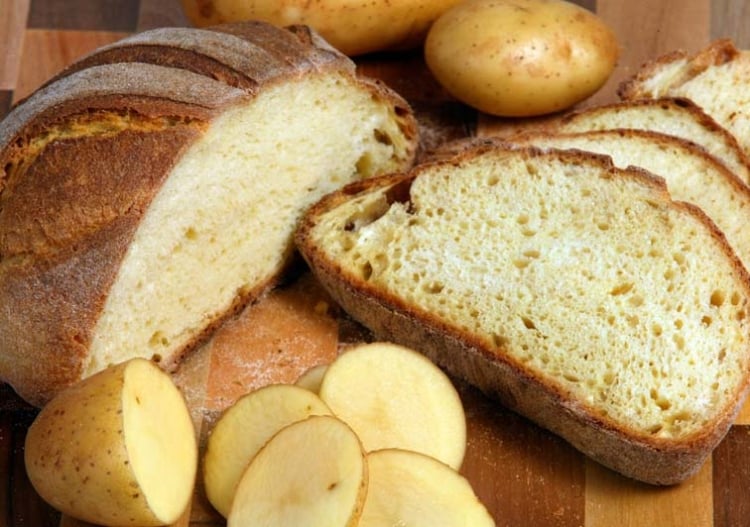
The Potato Bread of Garfagnana is an ancient specialty from Tuscany, more precisely from the Garfagnana region and the Serchio Valley. This loaf of bread, which can weigh up to two kilograms, has a golden crust and an incredibly soft and porous interior, which remains fluffy for a long time. Here, we will take you on a journey to discover this gastronomic delicacy and its unique characteristics.
Potato Bread: An Ancient Tradition
In Garfagnana, the tradition of the famous Potato Bread is still alive.
This bread, also called “garfagnino,” is a more delicate variation of a mixed grain bread that was once widespread throughout continental Europe, especially during times of poor cereal harvests.
The recipe involves adding 15% boiled and mashed potatoes to wheat flour, along with a bit of semolina, bran, and medium-grain sea salt.
The leavening process occurs using sourdough, to which a bit of yeast is added to reduce the acidity.
The locally grown potatoes give the bread a unique softness and flavor. Potatoes cultivated in the municipality of Sillano, in the areas of Metello and Dalli, at an altitude of about 1200 meters, are particularly prized.
After shaping the dough into oval loaves, they are dusted with corn flour and baked in an oven preheated with the fragrant wood of the oak tree.
After about an hour, the loaves are ready to be enjoyed. Thanks to the moisture of the potatoes, the Potato Bread of Garfagnana keeps well for several days.
The Taste of Potato Bread
The Potato Bread of Garfagnana does not have a strong potato aroma, either in the nose or in the mouth.
The addition of boiled potatoes gives the bread a more pronounced flavor compared to common Tuscan bread, making it softer and more preservable.
The large loaves, weighing one or two kilograms, are excellent when sliced and paired with typical Garfagnana cold cuts, such as biroldo, mondiola, lard, and bacon.
The Ancient Recipe for Garfagnino
The ancient recipe for Garfagnino dates back to 1817 and was taken from a volume by Nicolao Tomeoni kept at the State Archives of Lucca.
By following this recipe, one can make an authentic homemade Garfagnino. Here’s how it’s prepared:
Preparing the Yeast and Potatoes
The night before baking the bread, prepare the yeast by mixing the chosen flour (preferably whole grain) with a bit more quantity than usual. The next morning, place a quantity of well-washed potatoes in a pot, corresponding to about a third of the amount of flour needed for the dough (between 15% and 30%). Boil the potatoes until they are soft, then peel them and add them to the dough. If you don’t have a kneading machine, you can work the dough with your hands until it becomes homogeneous.
The Dough and Leavening
The dough obtained from mixing the potatoes and flour is used to knead almost all the remaining amount of flour. After shaping the bread, let it rise in a warm place. The Garfagnino requires a little more time to ferment than ordinary bread. Once the oven is well heated, bake the bread and let it cook until it reaches the perfect consistency. Thanks to the special characteristics of this bread, it can be stored for a long time without becoming hard.
Quick Booking snippet

Extra virgin olive oil is a natural product that continues to evolve after pressing. Heat, light and oxygen accelerate this process and gradually affect both flavour and quality. At Villa Campestri Olive Oil Resort, this is something we know well. Our family has been producing extra virgin olive oil for generations, using olives grown in […]
Mugello is best known for its charming villages, ancient woodlands, historic villas and quintessential Tuscan landscapes. What many people don’t realise is that, after sunset, its clear skies and low levels of light pollution create ideal conditions for observing constellations, planets and, at the right time of year, even the Milky Way stretching across the […]
Villa Campestri, the world’s first Olive Oil Resort, transforms extra virgin olive oil into an experience that brings together nature, gastronomy, wellbeing and a deep connection to the land.
Have you ever woken up in the morning feeling as tired as when you went to bed? Or found yourself exhausted at night, only to lie awake for hours? Perhaps you’ve experienced that familiar afternoon slump, when your energy suddenly disappears for no obvious reason. Most of us blame stress, a busy schedule or lack […]
One of the most meaningful experiences during a trip to Tuscany, beyond visiting art cities or iconic landscapes, is connecting with everyday local life. That connection often happens in village markets, artisan workshops, and small food shops where products are made for the people who live there year-round, not just for visitors. In this guide, […]
How to get to Mugello from Florence and how to travel around Tuscany with or without a car. Distances, trains, buses and transfers.
Romantic weekend in Tuscany between Mugello and Florence: scenic rooms, candlelight dinners, and olive oil tastings. Discover Villa Campestri Olive Oil Resort.
Anyone visiting Florence for the first time imagines a stay right in the historic center, surrounded by museums, piazzas, and narrow cobblestone streets. It takes only a day, however, to realize that Florence is wonderful to explore yet challenging to inhabit. Between ZTL restrictions, scarce and expensive parking, constant noise, and high prices for even […]